Friday, August 16, 2013

Back to What I Like

I am currently in the progress of re-engaging with my photography.  My goal is to try and find where my head is in terms of what I like to photograph, but also what I like to look at.  If I can bring the two together I should be in a better place.  This set of photographs and blog entry is a return to a subject that is becoming a thread through my work, the river Isar and the activity along its banks.  I also need to ground my work, to avoid the continual flipping from one thing to another that has characterized my recent work, weddings, underwater, landscape, and so on...

I also need to work out in my mind what I want to get out of the remainder of this course.  I will write about this in a future post, I know what the options are, just not which one to take.  This short set of images is a way to help me to find that answer.

One aspect of my photography is a disinterest in people, but an interest in their presence.  I do not see people as characters in my pictures, but as transient subjects inhabiting a landscape that I am creating.  The following is an example.  This photo appeals to my need for geometry, lines and curves that come together to create a harmony, or chaos.  This is still a photo about people, this is a human place and there are two people in the frame, lending a presence, but a transient and almost invisible one.


The problem with either photo is that the graffiti makes a cultural statement that generates fear.  Deeper into this underpass the walls are covered in graffiti and it is beautiful...  The B&W version even hides the pink graffiti making for a more threatening image.  Somehow a pink heart takes away the menace that might be there.  Herein is another challenge I am wrestling with, working in colour or B&W.  I am still very drawn to mono, but do not see this as a long term thing, just something I need to explore right now.

The next photo describes where my head is at the moment.  This is a documentary photo that portrays a sunny afternoon.  The people inhabit the photo, but do not make it.  Here I am trying to describe a part of the city, building an image from the layers of the landscape.  Without the people it would be an OK image, but with them it is a document of society.  In a way this probably lends more to Joel Sternfeld or Stephen Shore than to Robert Frank, a problem that is beginning to niggle me right now.  I want to write about Frank, but am not so sure about the "In the Style of" bit.


Once again I have taken very different processing strategies.  The B&W is dark and contrasty, the colour fresher more pastel.  That is where the images took me.

A few more with a similar goal in mind, all taken along the riverbank...


Oh, and when I first edited this entry, I forgot to mention that these photographs were taking with a view to learning the use of an auto focus lens - time for a reset.

Saturday, August 3, 2013

P26: Selective Focus

Over time my use of wide apertures is changing.  Many years ago when I first realized what a wide aperture lens could do, especially at telephoto focal lengths, I used this technique a lot, marveling in the new found world of Bokeh.  Nowadays, I cringe when I read that word, it and the technique it springs from is one of the most overused cliches in photography.  I recall a conversation I had with Rob in a bar in Leeds in which we agreed that most photography could be done by setting the camera at f/8 and letting ISO worry about the rest.  In fact, these days if I am working street photography or landscape this is pretty much what I do.  The more popular magazines describe f/8 as the boring safe aperture, wrong, it is the sweet spot where stuff works and the photographer can worry about what is in the frame.  We spend so much time on the physics and technicality of handling the camera that we forget that it is about the picture.

Now, you might immediately point me at my last two posts in which I gleefully used fast lenses wide open at f/2.8 or f/2, and yes I also agree that there is a value in such photographic technique, but it should be used carefully and deliberately to produce an effect for a purpose.  In my case this is generally to romanticize a couple or to reduce a picture to an abstract blur.  I also think that narrow apertures f/22 and up are also over used. Landscape photographers marvel over the depth of field, as do macro photographers, the problem I have is that they can create descriptive photographs that somehow lack a soul.  For me f/8 is where its at.  I have an f/1.2 50mm full frame lens in my cabinet which is where it stays - expensive lump of glass.

This project, however, suggests a use of shallow depth of field quite different from what I have used in the past, to blur the foreground and not the background.  Here are a couple of wedding/engagement shots that place a sharp foreground on a blurred background, the conventional use of low depth of field.


However, I have also used the opposite to blur the object of desire in a groom's gaze:


In the above image the blurring affect draws attention to Toby's face as he commits himself to Kati. The lack of detail in Kati, suggests rather than states.

The next image was one of those snap moments when a picture emerged from the crowd then vanished again.  Here Julia is framed by the two older ladies, their blurred white hair drawing attention to Julia in the background, her eyes directly engaging the camera.  The slight blur on the foreground really emphasizes the figure in the background.


Similar shot, different subject, a Bayern fan enjoys the lead up to their Champions League victory this summer.  Once again the two figures in the foreground serve as a frame bringing the eye into the image.


An alternative view is the following.  Not a great image, it is too untidy, but the contrast is strong between the flowers and the rowdy fans.


I finish with something quite different and strange.  I have been trying to adapt a shallower depth of field approach to my underwater macro photography.  This was shot at f/4, but very close to the animal which has thrown it almost entirely out of focus.  This is a very delicate lacy scorpion fish with a strange fragile beauty.  I wanted to do something different, most people would shoot this at f/22 or higher, creating a very detailed and dark image.  By shooting at f/4 I get this luminous affect.  The key is in the eye, it must be in focus and is why it is at the center of the frame right underneath the focal point for that shot.  I might have chosen differently, but such moments are fleeting and wearing scuba gear managing a camera is more challenging.


I use this technique of blurred foreground very selectively.  It has the risk of becoming very trite, but has been used by the masters, Garry Winogrand springs to mind, but he is a master of this technique, although in his case I am sure many such shots were happy accidents.

Sema & Ermis

Yet another blog post that is not actually about my course, although this one is firmly within the genre of social documentary.  Another event, not a wedding, but honestly without knowing I would have struggled to tell. Back in April, our next door neighbour asked whether we would be interested in photographing an engagement party for a Turkish  friend of hers in June.  I agreed, not really thinking too hard about what I was agreeing to.  Well, I now know a lot more about the engagement rituals of the Turkish community.

From the first meeting with the couple, it was obvious that Sema had a very clear idea about what she wanted in terms of photography.  It was actually quite refreshing to have someone provide examples of photographs that she liked, enabling Heidi and I to plan our work with them.  Too often people we photograph are very vague, sentences such as "you know best" or worse, we want  you to "enjoy yourself, just take a few shots, we'll be happy", don't help.  I know damn well that they want romantic beautiful images that they can share with friends and family and ultimately their children.  I value the few photographs I have of my parents 1960's wedding, who wouldn't.  Sema was very clear and Ermis, well, he was clearly going to do whatever he was told to do.  Perfect!

Because we knew exactly what she wanted I could plan my equipment and also the location we would use.  The plan was to meet at 1pm for a series of romantic images of the couple, then move onto Sema's home where the actual engagement would take place. And then the coffee, the party, the dancing, the ribbon, the jewelry, the cake, oh boy, we had no idea what was actually going to happen, but we were well prepared.  The day was dull, rain forecast for the whole day and getting heavier as the day went on.  Our original location was scrapped as it offered no cover, so a couples of texts set up plan B, the Munich Hofgarten, a place I was familiar with from its use as the location for Assignment 3 in DPP.

The dull grey skies and rain actually proved to be a blessing as it eliminated the shadows and yielded a balanced diffused light.  We had a large and colourful golfing umbrella to act as a prop and for additional shelter.  The garden was ideal offering lots of covered spaces and heavy tree cover.  The only problem with the weather was that it was cold and after about 90 minutes Sema was too cold to continue with the shoot, but we had enough by then.  I took a pretty standard wedding load out, 16-35, 24-70, and 70-200 f/2.8 zooms, plus my 135 f/2 for the more dreamy look.  A couple of speedlights and my 5D2 and I was ready to go, although a sore shoulder would be the price for all that kit and spare batteries, etc.  As always Heidi had my backup 7D with a 17-55 f/2.8 and acted as second shooter.  We have an understanding.

The day then started with a fairly standard portraiture shoot, an attractive couple letting me practice my skills on them in exchange for some free photography, happy with the results, but nothing particularly remarkable


Along the way we had some fun with the umbrella


Nice images, but could belong to any culture, however, the next shot is very specific to Islamic culture:


The blue glass object is a Nazar, a talisman against the evil eye. The couple wanted to be photographed under it to bring them luck and protection. This created some logistical challenges, resolved through the use of the umbrella and one of my shoelaces.  I took a variety of images, this one worked for me as it suggests rather than illustrates. As the day progressed I found many Nazar's attached to gifts and worn as jewelry.

Apart from the rather conventional portraits so far Sema wanted something a little more romantic and different.  Heidi helped to create a few poses and then I processed the images along different colour lines.  First of all I tried a little desaturation (well quite a lot actually):

The next one would be my choice from the set, a moment in time, not really posed, they were just larking around a little.  Focus is poor and I have gone for a rather traditional black and white process, a strong vignette framing the couple.


The next one, well this is a case of the customer is always right, even when they are not actually paying.  I did not explain that such methods could get me disbarred for life from the fraternity of serious photographers...

And all done in Lightroom, no recourse to the evil Photoshop CS


OK, that was the portraiture, a nice set, lot's of fun to make, but not saying a great deal about their culture.

This changed when we got to her parents home:


An Aunt from Istanbul made us very welcome with cheese filled pastries and small glasses of sweet tea.  We felt a little odd as we were strangers in the house and there to do a job, but they were so hospitable and friendly - we rapidly became a part of the celebration.

At this stage we were just Sema and her relations.  After an hour had passed Ermis and his family arrived, now the formal part of the day would begin.  We were about to witness and record a series of rituals that are centuries old.  We gathered that Sema and her family were pretty relaxed about doing things the formal way, however, Ermis's family wanted things done properly and so they were...

We had done some research, and so had a basic understanding of what would happen, but it was to be an interesting day.  First of all Ermis's relatives gathered in the living room for coffee.  At this stage there was a palpable tension in the air, everyonewas being terribly polite and reserved.


Coffee - this was the first and perhaps the best ritual of the day.  Traditional Turkish coffee is strong and thick, not for the faint hearted and especially not if you are the future groom.  Note in the photo below the one cup that is a different colour.


The key here is that Ermis must take the cup and drink it, enjoy it and finish it. the challenge is that in addition to coffee there is salt, pepper, chilli, pretty much whatever Sema wanted to add.  In fact she was being quite sparing, her friends upped the ante - he really needed a spoon to eat this coffee.  Anyway, this is a traditional test of his tolerance and love for his wife, whether she can cook or not.

Then came the first major moment of the day.  I think it is Ermis's uncle, not his father, but this was hard to follow as my Turkish is non-existent and my German poor.  In any case her father was formally asked for his permission that his daughter would become part of Ermis's family.  This was a very emotional moment and marked the point at which the couple became betrothed to one another.  The giving of a ring (first piece of jewelry) sealed the relationship.


At this point the tension lifted and everyone started to hug, Mother's ran from the room in tears and the first step on the journey to marriage had been made.  Normally this would then be followed by some time before the next step of actual engagement.  Yes, we were a little confused, we thought they were now engaged, but no, that would come later.


Many presents also arrived, primarily in the shape of food:


Next we all headed off to the local catholic church hall for the evening party.  Heidi and I thought we would be with them from 1 until around 6, no chance, this was quite an event.  We really had not idea, we just went with the flow.

A table had been laid out at the church hall for the couple facing the guests.  No alcohol at this stage and in fact the only alcohol present was a bottle of champagne that the couple shared.  They were following Islamic principles, but not too rigidly as we shall see.


I have also noticed that any Turkish event will somehow incorporate Ataturk the father of the nation.


Back to my comment about Islam, no alcohol OK, but those heels and skirts, these girls might be Muslim, but that was not going to get in the way of partying.  I found this all very interesting and quite refreshing, Islam is too often portrayed as rigid and cruel, the truth is far away.


Everyone then sat down to eat which we declined as we prefer to work and then eat later. The food really looked good, but one you sit down to eat it becomes hard to take photos, I have tried this before and it is frustrating to keep getting up and down.  However, big mistake, at this stage we thought we would go out for dinner when we were finished with the photographs, at 10pm we stopped in a gas station to grab two frozen pizzas on the way home.

Next came a series of group photos, dozens of them, every possible combination of family and friends.  Heidi had been warned that Turkish people love to be photographed, but oh boy...


The main event was, however, finally drawing near, the actual engagement.  Two rings were joined by a ribbon, these are the actual engagement rings.  The couple will put them on and then after some jollity and bribery someone will step up and cut the ribbon.  This then marks the point of engagement.  Later in the evening the ribbon is cut into strips and shared among the single girls in the room.  Whoever selects the "short straw" will be next to be married.


And I did mention, jewelry, well we have seen 3 rings now, then came the serious stuff, another fabulous jeweled ring and ropes of pearls.


Next, the dancing, starting with Sema and Ermis.

As I said at the beginning, I would have thought this was a wedding, if I had not been told quite emphatically that it was an engagement.  If you are wondering, well the wedding is next year and the invitation list is expected to be roughly 700 people, not sure we will be back for that one, not sure I want to or am even capable.


However, it will probably be quite a blast, the dancing was fantastic, the music loud and exotic.


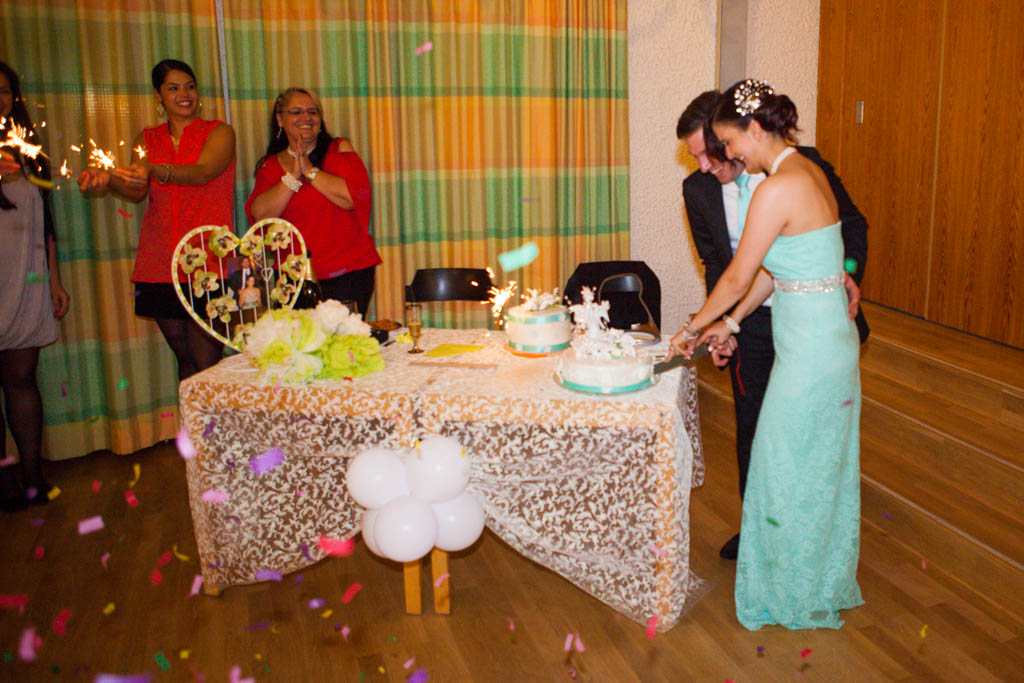
It was now nearing 9pm, Heidi and I had been on the go since 12 and were getting a little weary.  We approached the couple to sign out and wish them well.  Cake, the cake, you must take photographs of the cake.  Actually two cakes, each of which took over a day to create.


Like I said, the wedding is going to be quite something...

What a day, really enjoyed it, a wonderful insight into a different culture hosted by a lovely and very hospitable family. The wedding genre is not fashionable among "serious" photographers, but this really is social documentary, a study of people forming society, a merger of two families.  This would have made a good day in the life of, however, it is not easy to integrate these events into the course, they happen when they happen and not always at a convenient time for me.


In the Weeds

It is now nearly 4 years since I started my studies with the OCA, a time that seems much longer and yet so short.  In that time I have developed greatly as a photographer, learning new skills, developing new sensibilities and sensitivities, but most of all I have experienced a change in the way that I look at and understand the world.  It is not simply looking with a rectangular frame imposed on my vision, but a fascination with the way that objects in the environment associate with each other, how they align, overlap, intertwine, how right angles give way to curves, how colour plays against structure, in short how the world is constructed in the local.

I am a geometrist, I straighten pictures, I align things, my CDs are in alphabetic order (over 1200 of them), I clear my work desk every evening, in short I like an ordered world.  In my photographs I try to take the chaos of my surroundings and impose order on them, I use the camera to investigate structure.  This lends itself better to the landscape genre, however, I also think it has its place in social documentary.  This is the source of my current discomfort with my course.  When I was working on my final selection of images for assignment 2 I was consistently advised to crop the images closer, to make the people the essence of the image.  This enhanced the images in the sense that the emotive power of the human subjects became much stronger, but it went against my desire to impose order.  I want to place my human subjects within the context of their surroundings, to balance the landscape with the personal, not to make the person the only subject of the images.  In this sense I find myself a landscape photographer directed towards making portraits.  This is not what I want to get out of photography.  I am using photography to help me understand the world around me, but not necessarily the people who inhabit it.

To put this into a historical perspective, I love the work of Stephen Shore, but am not terribly into Annie Leibowitz (celebrity work aside).  I simply have no need to get up close to my subject.

This is a key learning for me and will inform the remainder of my course, even if it means making lower marks in the assessment, I need to be working on something that interests me and extends my understanding of photography.  I believe that I am finding my voice, and that this voice is not in close photographic portraits, whether formal or snatched.

This brings me to the real subject of this blog entry, a return once again to the urban landscape and an investigation of the mundane, trying to make it beautiful.  In my photography there is a constant source of inspiration in my work and that is abstract modernist painting and in particular colour field painting.  Possibly not very fashionable any more in our post-modern world, I still find the ordered harmony of these works inspiring.  It is not something that directly applies to photography, just an ethos to look at how shape and colour interact.

With this in mind I recently shot a bunch of landscape close ups using a macro lens wide open.  This was triggered after a day hiking in the alps.


Apart from the obvious film references (thanks Dewald), I started to wonder what these fields of flowers looked like very close up, how the patterns of colour interrelated with the structure of the plants.  I don't have the time these days to spend a day in the alps with my macro (I should and I know that, but tell my managers - I have 3 at the moment).  I turned to my local park, a small piece of land containing endless photographic possibilities.  The borders of the park are allowed to grow wild and within them I found what I was looking for:


There is a temptation to focus too much on individual form and detail, the next shot is an example of that problem


What I was looking for was something more like the following, where colour is a more dominant feature, although shape is still very present


OK, this is not really what I had in mind, but I love this for the balance of colour and structure - it has an abstraction, but is not colour field.


The next photo has too much structure, but I the hint of yellow starts to play with the colour a little


This one is far more effective, with nicely graded colour blends, but still retaining a sense of what we are looking at


In the next two the connection to reality starts to drain, but is still present


I accept a comment made by a fellow student that these photographs borrow more from Monet than Mondrian, but in that comment lies the challenge for photography.  Photography, however abstract, is an art of the real, we are capturing something that exists, not building a fabrication of the mind.  A photograph (for me) must always hint at what the subject is, otherwise it is simply a smudge of light.

This was a rather playful piece of work, keeping myself engaged with the art through doing something I love, taking a look at the world through a macro lens, creating a perspective that only a camera can reveal.  It parallels my underwater work and is very much inspired by what I have experienced photographing corals and the strange creatures that inhabit them.

Getting back to the geometrist in me, my final destination for this set of work was a square collage:

At that point I thought job done, then the surprise:

You never know where a project will go when you start.  An idle Sunday afternoon and I got published again. LOL

It's a strange world at time, but here I was having fun and perhaps is showed.  I need to do the same in my formal work, have fun

Tuesday, July 30, 2013

Assignment 3: First Thoughts

Written around 1st June


A week ago I got a reminder mail from the OCA, my first one, pointing out that is was more than 4 months since I last submitted an assignment to my tutor, a little rude.  But OK, I get the point, in fact it is now 6 months since I submitted assignment 2 and 4 since I did any work on an assignment.  I have 2 reasons, the first is pragmatic.  I needed to slow down a little, take a break and pace myself a little.  This is my final course before commencing with the new rewrite of Level 3, a set of courses yet to be finalized and probably not ready until 2014 (my guess here).


Today: 30th July


Think I might have a motivation problem going on...


I started this blog post the day before I started a new role at HP, I am now an operations manager for a Europe wide team that manages the relationship between HP and large software companies (e.g. Microsoft) and service providers (e.g. Accenture).  In the 8 weeks since I started, I have averaged 60 working hours a week, I am just coming up for air.  My own fault, I could have gone with the flow in my old role, but I needed a new challenge.  The irony is that I am once again locked to my desk and desperately trying to think of a way of re-engaging with my course.  A year ago I photographed myself working for Assignment 1.

I have had a couple of False starts recently trying to get back on the proverbial horse, did a few projects, tried to enjoy myself, but the course is still a barrier - it truly is inane.  I still get the need to be creative, but in the 2nd year of my first degree I do recall that alongside the projects and out of class work, I spent a lot of time in the class being taught stuff that might be useful - ah well...

I don't think it helps either that my next Assignment is an essay.  I don't have a problem with writing essays, I even enjoy the process, but it is too much like what I do for a living.  After 60 hours in front of a computer my weekends need to be more than another 12 hours in front of the computer.  However, it is what it is.

My subject is at least refreshing and interesting - Robert Frank.  When I was thinking about who to write about, Frank immediately sprang to mind, his Swiss in USA appeals to this Brit in Germany, and his style is one that I find timeless and of value to emulate in the next assignment.  He also looked at society, not people, his photographs investigate the position of the human being within the fabric of both contemporary civilization and landscape.  I find that with this course I am being driven to study the person not the society, I think Frank will help to get me back to where I want to be as a photographer, an observer of the world around me, not a participant.

With Frank I also have the opportunity to consider his impact on photography and how he acted as a pivot around which the genre of social documentary turned in the 50s.  Revolutions never take a day and are rarely the result of a single persons actions, however, there is a clear before and after with Frank that would beneift a deeper look.  I have been collecting books of Frank, about Frank, and of his contemporaries to be able to learn and then build a thesis about this man. I am not yet sure where to go with this, but it will be somethign along the lines of a before and after, rather than a retrospective.

And yes, this blog entry did avoid me going a month without commenting on my studies in 4 years with the OCA.